
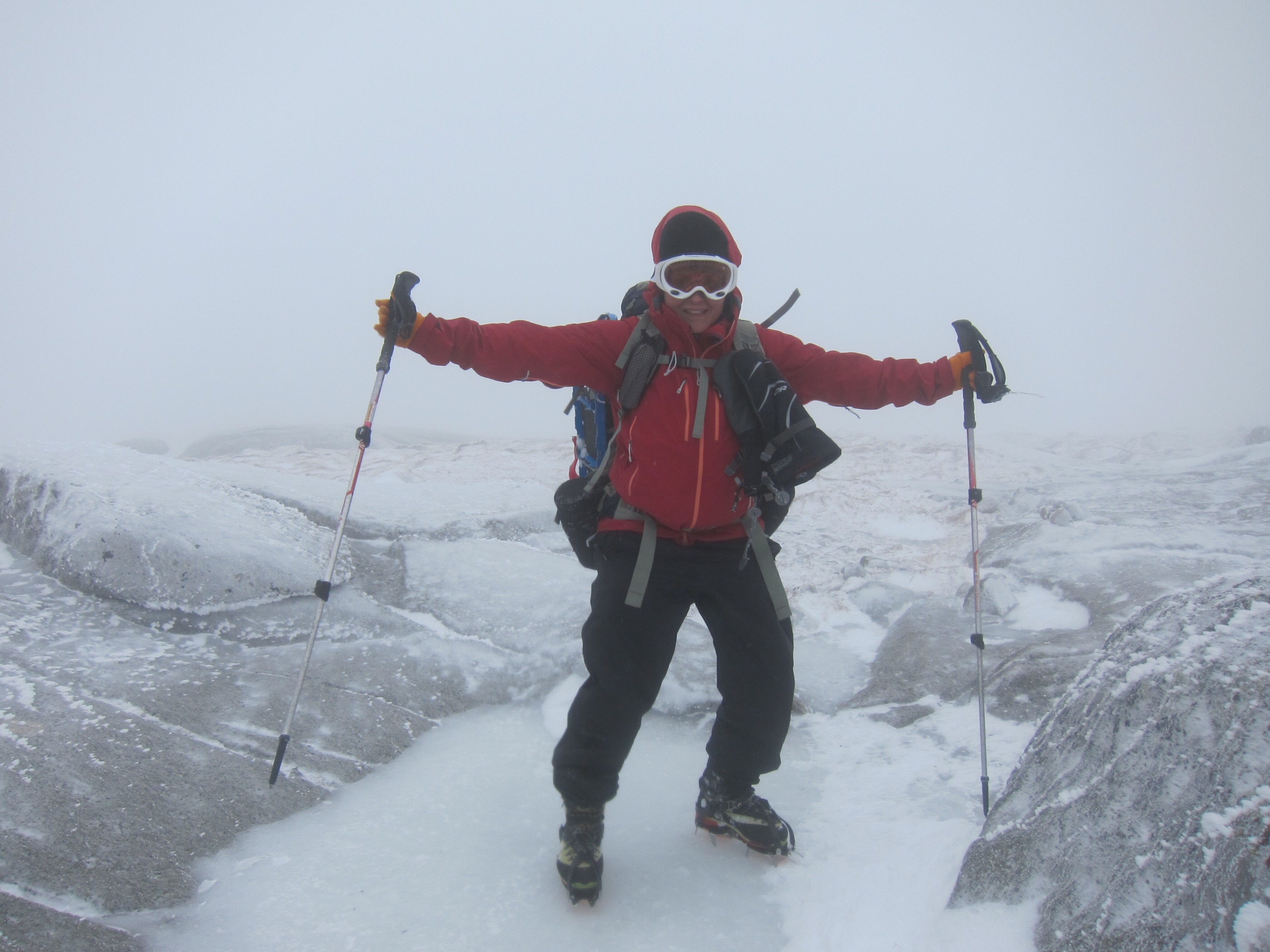
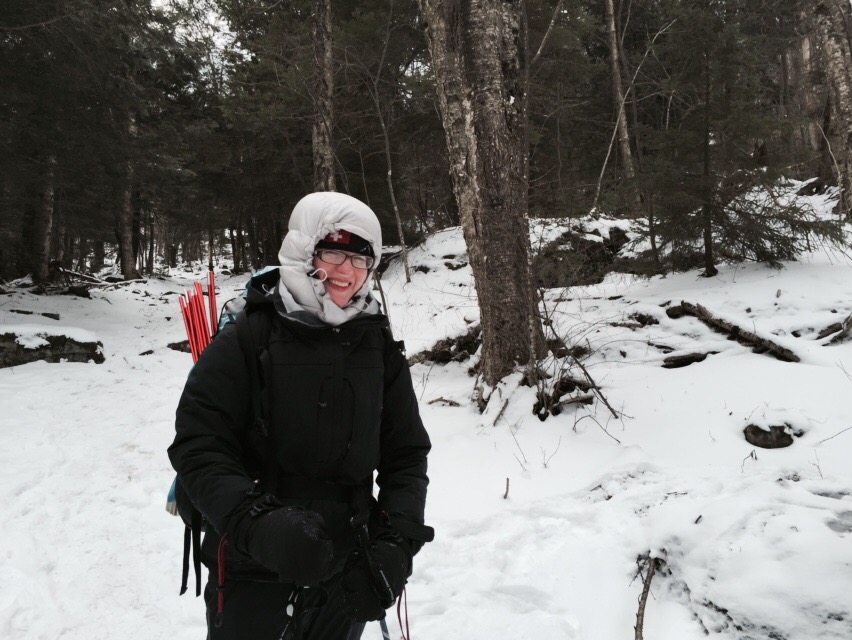
Okay may be not but that is me on top of Algonquin (5,114ft) last weekend. The 3000 foot ascent in 4.3 miles makes it a tough but doable climb. The last .7 of a mile seems to go straight up until you get to tree line. Then it’s rocks, rocks, rocks…and they are covered in ice, ice, ice.
On Sunday I led a group of hikers up to the top of Algonquin via the Van Hovenberg trail (blue blaze) and Algonquin Peak Trail (yellow blaze). Our group of 8 hikers were chomping at the bid to get on the trail and make it to the top of New York’s second highest peak. While we were all hopeful to reach the top we were also realistic to know that the mountains make their own weather. And today’s high peaks weather forecast was looking a little iffy.
The latest weather prediction provided by the High Peaks Information Center (HPIC) was calling for 40-50 mph winds with 90% of the mountain socked in by clouds. The good news was that the rain was supposed to hold off until 3pm. The temperature was in the low 30’s but when the wind picked up, it felt a lot colder, even below tree line.
We started down the trail around 9am hiking in Microspikes then changing to snowshoes about a mile in due to the fluffier deeper snow. The trail runs through the high peaks wilderness area and a lovely forest lined trail protected us from the wind.
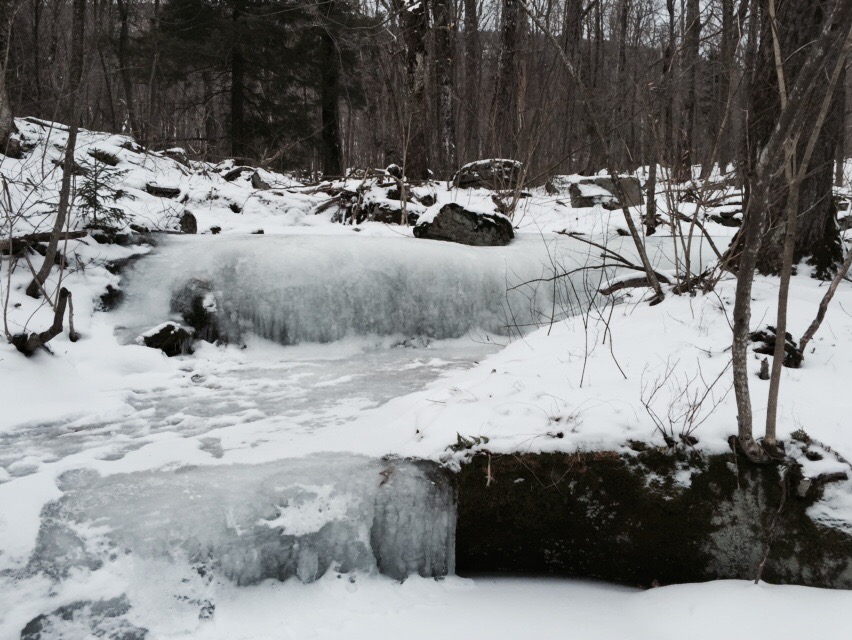
There aren’t too many views in the first 2 or 3 miles except for some nice frozen water falls occasionally. Luckily we could hike around the first two small water falls in our snowshoes. The last wall of ice required is to change into our crampons.

From here the trail gets very steep. At the 2.4 mile mark we passed the junction to turn up Wright Peak. This was on our list to do but we heard from another hiker coming down that the wind was “scary”. This is pretty typical of Wright, it’s often said to be one of the windiest non-high peak summits for some reason. ADK guidebook mentions the “scary” wind in its description.
Our group took a quick vote and decided to just head up Algonquin and leave Wright Peak for another day. Up, up and away we went, nearly vertical on the hard snow packed trail with our crampons. I could feel my heart pumping hard as I slowly continued up the trail. Step, step…rest. Step, step…rest. My leg quadriceps and gluts were beginning to get fatigued and using the “rest step” during this climbed saved me.
Soon our group of 8 turned to 5 as we had three hikers that needed to go slower up the final push to Algonquin’s summit. My 5 hikers arrived at the edge of the Arctic zone and got our summit gear ready. Hood up, goggles on, crampons adjusted… And away we go!
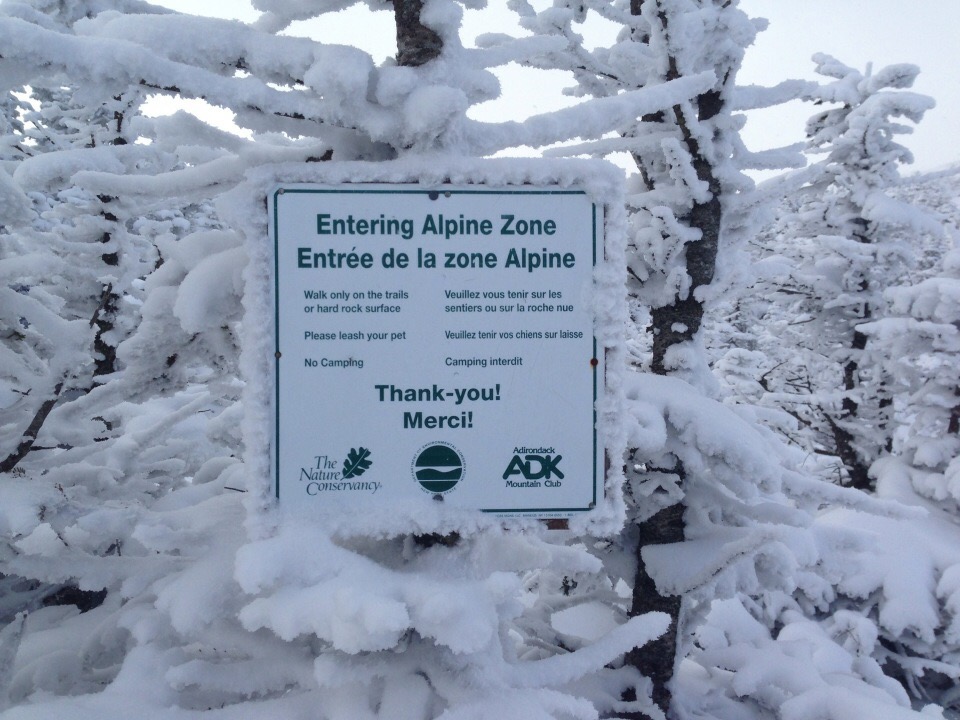
The climb onto the ice covered boulders on the top seemed to be easier walking then the near vertical climbing up to tree line. However, more careful stepping was necessary due to the very icy conditions which made us have to really dig our crampons on each step. Couple careful foot placement with poor visibility and increasing wind made it hard to follow the trail in some spots. Usually a hiker follows blazes painted on rocks or tree to lead the way. On the tops of bald summits there are rock cairns, essentially large piles of rocks every so often that guide you along.
When we finally hit the summit the wind picked up quite a bit. It was hard to stand upright without digging into the ice and bracing against the wind. We snapped a few quick pictures and prepared to hike back down the way we came.
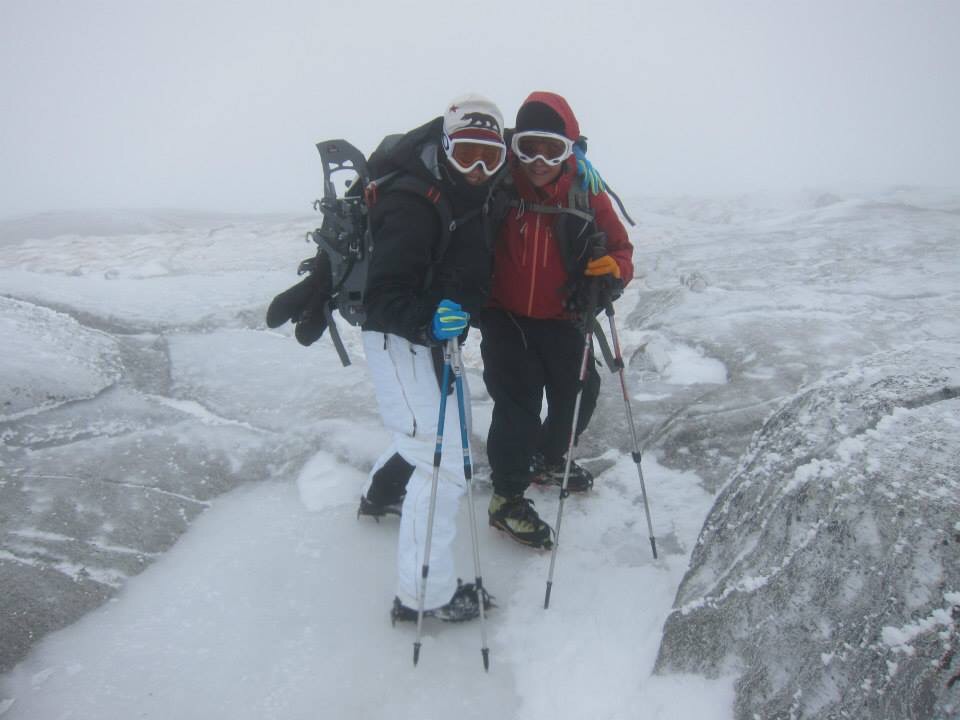
Going back down the icy summit is quite taxing on the leg muscles. It’s like doing hundreds of lunges…only on ice! Digging in each crampon and feeling secure enough to move my other foot to take a step. Finally reaching tree line we all tucked in out of the wind and had a much needed snack to fuel is up for the 4.3 mile walk back to the cars.


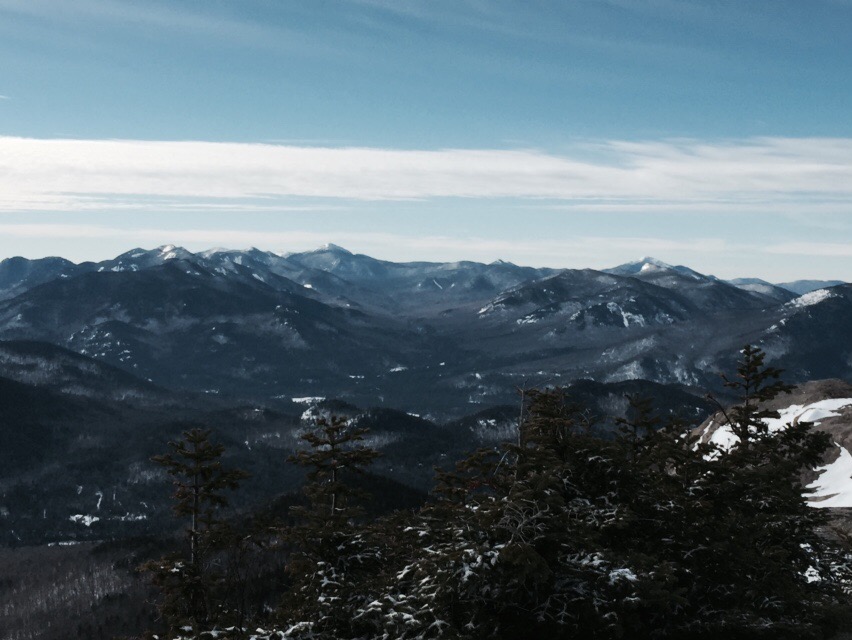





 hilltackler